


Anya Brown to be Featured in National Geographic Film Highlighting Groundbreaking Ocean Research
Brown, Who Studies Coral Reefs, Will Appear in ‘Expedition: Saving Our Seas’
Anya Brown, a National Geographic Explorer and assistant professor of evolution and ecology, will be featured in the upcoming film Expedition: Saving Our Seas, premiering Friday, November 13, at 9 p.m. EST on National Geographic and streaming November 14 on Disney+ and Hulu. The film spotlights the work Brown has done with Rachael Bay, an associate professor of evolution and ecology, and Teina Rongo, their collaborator at the Cook Islands-based nonprofit Kōrero O Te ‘Ōrau.
Narrated by Auliʻi Cravalho, the documentary showcases groundbreaking discoveries from the multi-year National Geographic and Rolex Perpetual Planet Ocean Expeditions across all five ocean basins. The film highlights how combining cutting-edge technology with coastal community knowledge can deliver vital scientific discoveries and solutions to protect our global ocean.
What Makes Corals Resilient?
As part of these expeditions, Brown, Bay and collaborators at Kōrero O Te ‘Ōrau investigated coral reef resilience in Rarotonga, the largest of the Cook Islands in the South Pacific. Brown’s contribution focuses on whether the communities of microbes living with corals could help explain why some withstand rising ocean temperatures while others bleach and die.
When stressed by heat, corals can lose the symbiotic algae that provide them with food and color. This process, known as bleaching, leaves corals vulnerable, threatening the reefs that provide habitat for marine life and help protect coastlines.
Brown is examining whether heat-tolerant corals harbor different microbial communities than their more vulnerable neighbors — and whether changes in those communities could help corals cope with future heat waves.
“While coral populations may take a long time to evolve or adapt, their bacterial communities can change on much faster timescales, which might play a role in protecting coral from future heat stress,” said Brown.
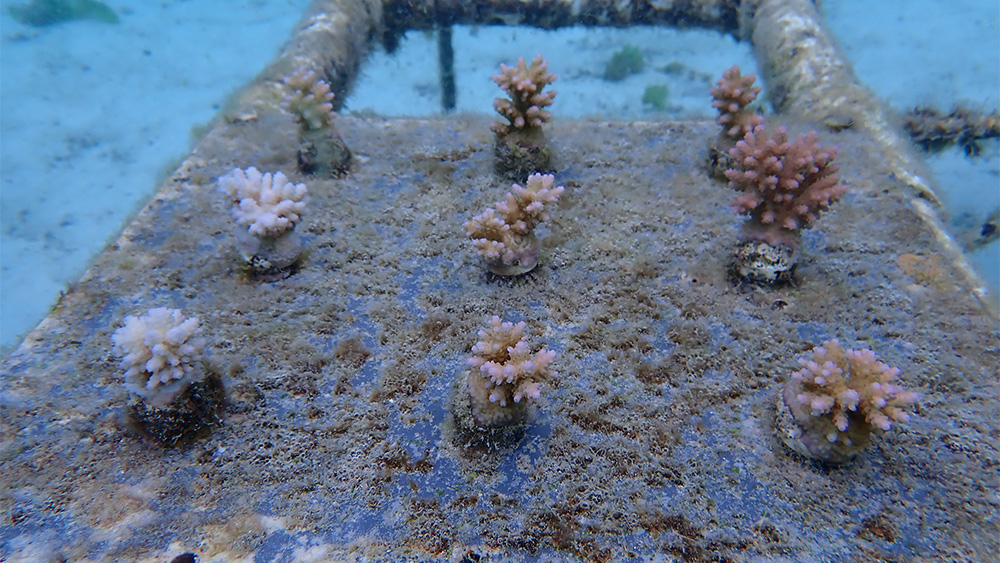
Working with Bay and Kōrero O Te ‘Ōrau, Brown helped establish an underwater coral nursery. By growing similarly sized coral fragments in the same location, the team can compare how corals with different genetics and microbial communities respond to the same environmental conditions.
The collaboration brings together Bay’s expertise in coral genetics, Brown’s focus on microbes and species interactions, and local partners’ knowledge of Rarotonga’s reefs. Kōrero O Te ‘Ōrau collaborators monitor the nursery between research visits, and young people in the organization’s environmental stewardship program participate in research and science workshops.
The findings could help identify heat-tolerant corals for local restoration efforts and guide strategies to protect reefs as ocean temperatures rise.
“As corals are lost at alarmingly fast rates, understanding how they respond to environmental change is critical—particularly whether they can respond fast enough to keep pace,” said Brown.
Marine Science at UC Davis
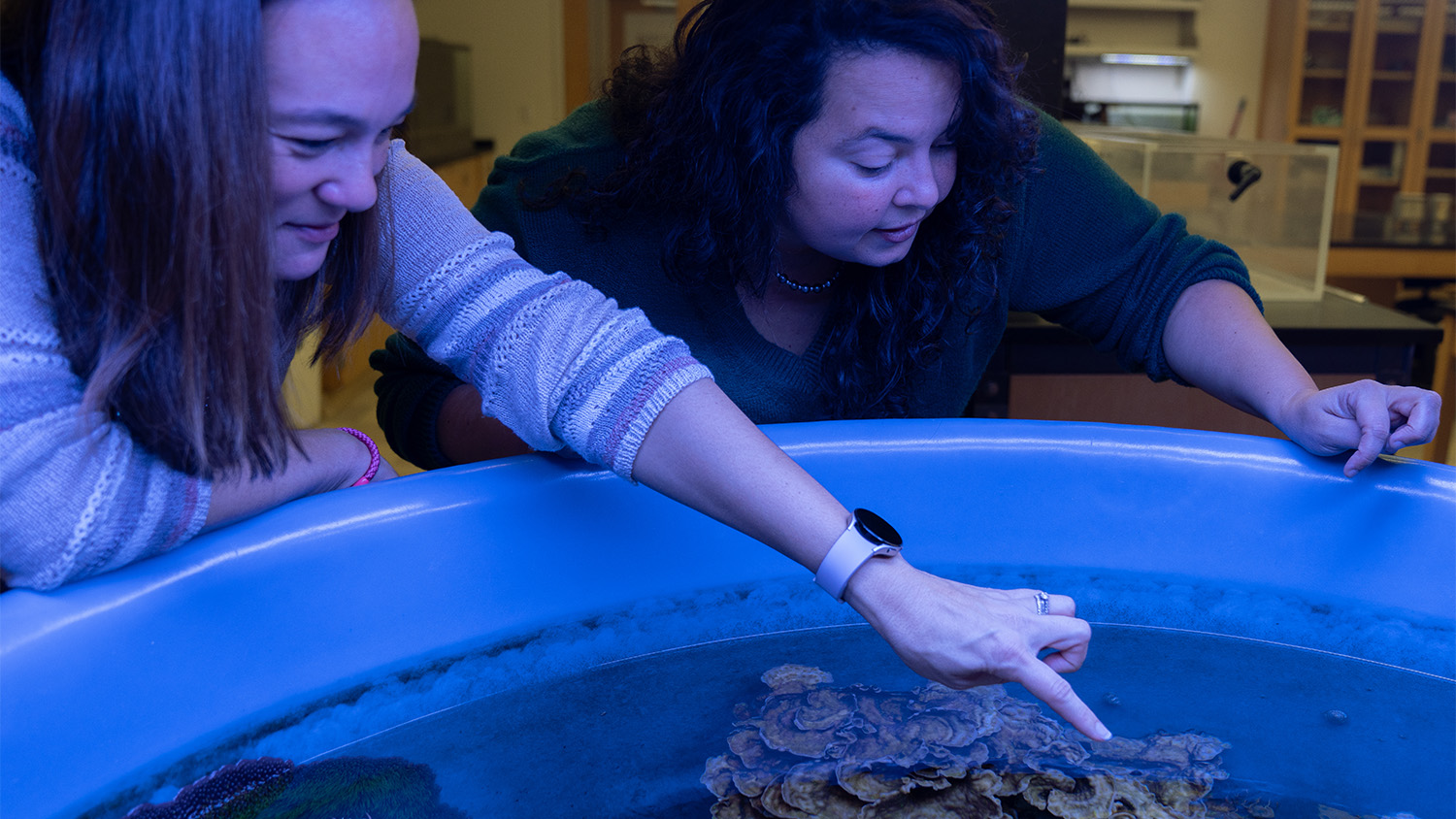
Brown’s research reflects the breadth of life sciences at UC Davis, where researchers in the Department of Evolution and Ecology explore how organisms evolve, interact and respond to environmental change. The Coastal and Marine Sciences Institute connects expertise across campus and at Bodega Marine Laboratory, bringing together researchers and students to understand coastal and ocean environments and address the challenges facing them.
Where to Watch
- Television Premiere: Friday, November 13 at 9:00 p.m. EST on National Geographic Channel
- Streaming Availability: Saturday, November 14 on Disney+ and Hulu