Richard Addante studies the neurophysiology of human memory. He recently joined up with NASA to study and better understand the effects of long-term spaceflight on the brain, body and team dynamics, of which little is known.
UC Davis graduate students gathered Wednesday morning, Nov. 29, outside the Memorial Union, the central hub of campus, to protest tax reform legislation being considered by Congress. The demonstration was part of the “Grad Tax Walkout,” a national event meant to show solidarity against the Tax Cuts and Jobs Act, which, if passed, would make graduate education unaffordable for millions of Americans.
Why study the brains of birds? Do birds even have brains worth talking about? In fact, birds can show complex behavior and mental function. We can learn a lot from studying the neuroscience of birds — knowledge that we can relate to how human brains function in health and disease. In this video, Rebecca Calisi Rodriguez, assistant professor of neurobiology, physiology and behavior in the UC Davis College of Biological Sciences, introduces her own work on bird brains and talks to some prominent neuroscientists about their work.
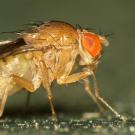
In a paper appearing in PLOS Genetics, Professor David Begun, Department of Evolution and Ecology in the UC Davis College of Biological Sciences, compared the genomes of different fly species to understand how genes—both within and between species—evolve adaptively. He found that two fly species that diverged from a common ancestor some 50 million years ago, exhibited parallel evolution on both short- and long-term timescales.
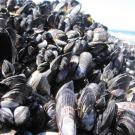
Nature itself can be the best defense against climate change for many species — at least in the short term — according to a study published today (Nov. 22) in the journal Ecology Letters from the University of California, Davis.
In a review article published in Nature: Science of Food, Professor Raymond Rodriguez and his colleagues explore the relationship between diet and brain health, proposing a framework to understand the body’s “food-brain axis,” the intersection of diet and the formation of new brain cells. Rodriguez’s aim is to provide researchers with a dietary roadmap to help prevent cognitive decline.
Rutaganira studies marine organisms, which might hold the key to understanding the origin and evolution of animals. Her ultimate goal is to work in academia as a professor at a research university.
How did plants develop photosynthesis? The story is really nothing more than a tale of biological thievery.
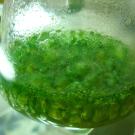
Publishing in The Plant Cell, Lagarias and his colleagues found that a pigment called biliverdin is essential to light-induced chlorophyll production in the alga. This discovery is helping scientists understand why diverse algae retain these pigments, although many lack phytochromes.
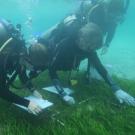
In a study published in Proceedings of the National Academy of Sciences, Professor Susan Williams found that planting multiple species of seagrass accelerates marine ecosystem restoration, improving overall survival and growth of the transplanted seagrasses.
Associate Professor Aldrin Gomes, Department of Neurobiology, Physiology and Behavior in the College of Biological Sciences at UC Davis, studies the underpinnings of heart disease, focusing on the machinery within heart cells responsible for producing the heartbeat. Along with colleagues in the Gomes Lab, he’s searching for molecular clues that will help medical professionals better manage heart disease.