Interacting with animals can make people feel calmer and less lonely and anxious. A new study from the University of California, Davis, shows that animals play an active role in shaping these interactions and their outcomes.
Being a single mother of 20 is no joke, especially if the survival of a whole species depends on it.
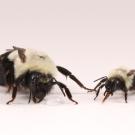
A queen bumblebee faces this very challenge when she lays her first eggs in the spring: She is utterly alone, with no worker bees to help.
She flies miles each day, collecting nectar to feed her young. She builds a protective nursery from wax. When she’s not out foraging, she climbs atop her larvae and buzzes to warm them.
UC Davis fourth-year neurobiology, physiology and behavior major Rogelio Castillo did not expect undergraduate research to open a path for him to create change in his community. His family’s past experiences with rushed and impersonal medical care led him to turn to science to ask the questions that improve both health outcomes and quality of patient-provider relationships.
Ecological medicine is a new approach to health science that draws on a very old idea: connecting with each other, with animals and plants, and with the natural world fosters health and well-being for people and the planet.
A new study by the University of California, Davis, shows how cells work together to avoid a sudden drop in blood sugar. Understanding these feedback loops could improve the lives of people with diabetes and help them avoid dangerous hypoglycemia.
The work was published Sept. 16 in Proceedings of the National Academy of Sciences.
The mind of a fruit fly encompasses 125,000 nerve cells, squeezed into the space of a poppy seed. At first glance, the fly brain looks nothing like a human brain. But many of the underlying neural circuits are surprisingly similar.
Fumika Hamada, a professor of neurobiology, physiology, and behavior, is using fruit flies to study a critical but oft-overlooked brain function: the regulation of our body temperature in a consistent daily rhythm.
What you don’t know about ibuprofen, one of the world’s most popular painkillers, could well fill a book — and that book has just been published, authored by Professor Aldrin Gomes and 36 of his current and former students at the University of California, Davis.
“Ibuprofen is an affordable and widely used medication that has transformed pain management for millions worldwide,” said Gomes, who teaches in the Department of Neurobiology, Physiology and Behavior. “However, its story serves as a powerful reminder of the delicate balance between benefit and risk.”
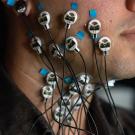
Lee Miller vividly recalls the day in 2021 when he met a woman who had lost the function of her vocal cords. In hoarse, whispering tones she explained how her voice had been instrumental to her vocation. Losing it, she said, undercut her life’s purpose. He had to listen carefully to hear her faint words, but the lesson “was really powerful.”
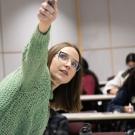
Rather than petri dishes or microscopes, in Brie Tripp’s lab you’ll find diverse undergrads gathered around laptops, carrying out the lab’s unique mandate of studying how to promote social and racial justice in science classrooms.