


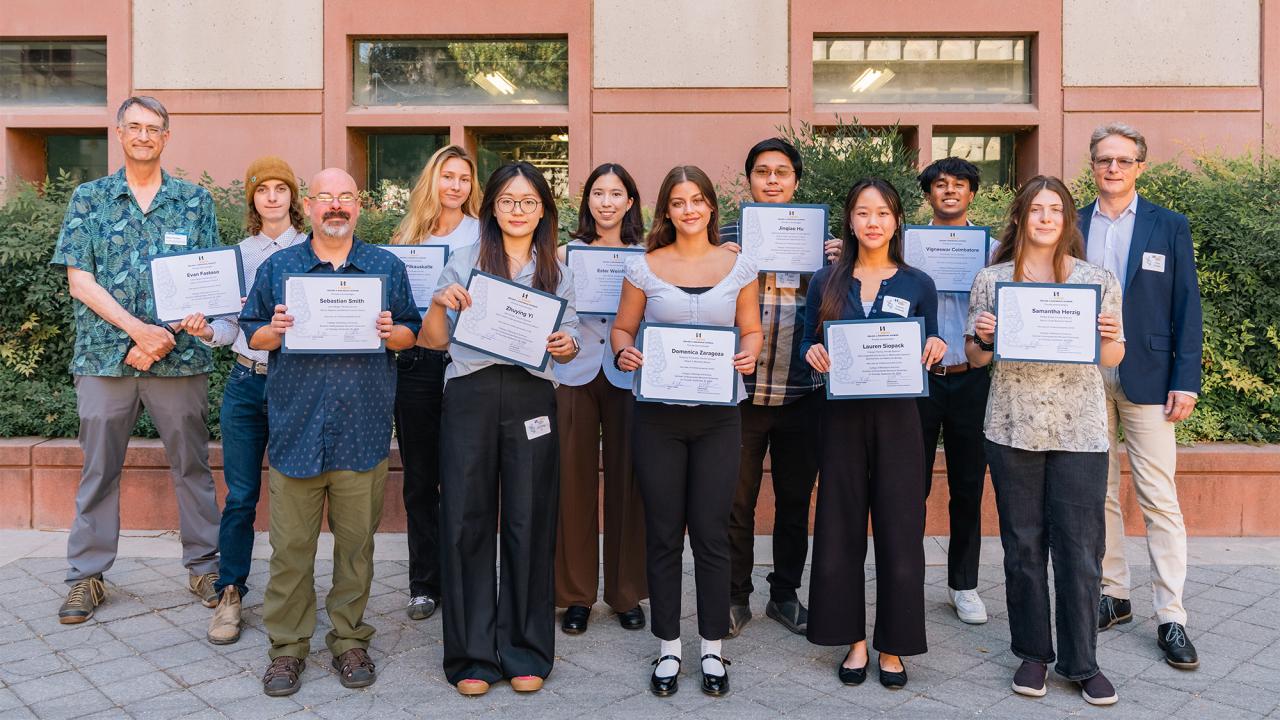
Donor Support Helps Student Continue Their Research Over the Summer
The annual CBS Dean’s Summer Undergraduate Research Program (SURP) supports students who wish to stay on campus—and in the lab—over the summer terms.
Normally, undergraduates leave campus for the summer if they are not enrolled in classes. They often do this to work and save funds for the start of the next academic year. SURP consists of several different donor-funded undergraduate research awards and allows students to continue their research projects over the summer.

“SURP is a cornerstone of how we are able to support ongoing, impactful student research and experiential learning,” said Frédéric Chédin, dean of the College of Biological Sciences. “The program enables each cohort to make continued contributions to their labs, which advances their respective fields of study and provides unique hands-on experience in research settings.”
This year’s cohort of SURP scholars began their projects earlier in the 2025-26 academic year. Over the summer, students in the program work directly with individual faculty on research projects and meet regularly with faculty and staff organizers of the program.

Dave Furlow, the associate dean of undergraduate academic programs who has been involved with SURP for three years, mentored and organized the student cohort. “A highlight of each year is watching the SURP cohort grow as scientists,” he said. “They are outstanding scholars, and these donor-funded awards enable each of them to spend their summers working as full-time researchers in exciting fields, laying the foundation for careers in science.”
Over the summer, SURP scholars meet with guest speakers from academia to industry, discuss their research experiences, and collaboratively develop their presentations for the research showcase. The program culminates in a day-long series of scholar presentations to the dean, faculty, and donors to the program.
Meet the 2026 Cohort of SURP Scholars

Vigneswar Coimbatore
Majoring: Neurobiology, Physiology and Behavior
Lab: Neil Hunter, Microbiology and Molecular Genetics
Award: Raymond L. Rodriguez Undergraduate Research Award
Research summary: Brca2's Localization with Key proteins of Meiotic Homologous Recombination
Infertility is a prevalent condition in humans that affects millions of people’s abilities to reproduce. Many cases are due to genetic mutations in germ cells that impact homologous recombination and crossing-over in Prophase I, an early stage of meiosis. To better understand the mechanisms underlying these defects, we use mouse models to study the regulation and functions of various proteins involved in meiotic recombination, and how their mutations might lead to the arrest and prevention of meiotic divisions. One protein of interest is BRCA2, a large mediator protein that interacts with other key meiotic recombination components like RPA, RAD51, and DMC1. However, how BRCA2 levels and localization are regulated during meiosis is not well understood, in normal or compromised meiotic germ cells. A known regulator of the normal progression of meiosis is HEI10, a E3 ubiquitin ligase which tags other proteins for degradation, possibly including BRCA2. Therefore, my research focuses on the localization patterns of BRCA2 with its functional partners in normal and HEI10 knockout cells.
Why it matters: Problems in how eggs and sperm form while ensuring genetic variation can contribute to infertility and pregnancy loss. Understanding the proteins that guide this process could help explain why it sometimes goes wrong and inform future approaches to treatment.

Evan Fastoso
Major: Plant Biology
Lab: Laura Bogar, Plant Biology
Award: Dean's Circle Research Award
Research summary: Ectomycorrhizal Diversity and the Health of Conifer Forests
Our forests are shrinking, and the trees that remain are facing a number of challenges. A changing climate is increasing the prevalence of droughts, which is also having an effect on the frequency and intensity of forest fires. On top of this, invasive pests such as bark beetles and rust fungus are having a negative impact on overall tree health. With all of these threats at hand, it is important that we develop a clear understanding of how these factors affect the entire forest ecosystem, which includes the soil microbiome. We currently don't understand the literal depths of this issue. Is there a correlation between overall tree health and fungal diversity? Additionally, how does the death of a tree impact this fungal diversity and its ability to sequester carbon? To answer these questions, my team and I are conducting genetic analysis on tree roots, along with taking respiration measurements and carbon dating to better understand the effects of forest fires on soil CO2 levels.
Why it matters: This research will have an impact on our ability to repair and maintain damaged forests ecosystems and will have greater implications on the effects of global warming and rising CO2 levels.

Samantha Herzig
Major: Plant Biology and Art History
Lab: Philipp Zerbe, Plant Biology
Award: Dean's Circle Research Award
Research summary: Understanding the Specialized Metabolism of Vansemberuu (Saussurea dorogostaiskii), a Sacred Medicinal Plant
Cataloguing and preserving the biochemical diversity of understudied plants is critical for the conservation of endangered species valued in traditional medicine. Vansemberuu (Saussurea dorogostaiskii), a flowering plant in the “snow lotus” group, is endemic to parts of Mongolia and Russia. It is medicinally and culturally valued by locals of the Darhad Valley, a remote region of northern Mongolia; however, the species is considered endangered due to climate change and poaching. Plants contain an abundance of diverse and unique specialized metabolites (SMs) which are often involved in environmental response in planta and can contribute to plants’ medicinal properties. However, despite its significance to the Darhad community and its endangered status, no research has explored Vansemberuu’s specialized metabolism. Our project utilizes international collaborations to identify elements of Vansemberuu’s specialized metabolism that may contribute to its medicinal value. Using metabolomics and RNASeq approaches, we are identifying metabolites extracted from Vansemberuu tissue samples and comparing relevant gene expression differences across three distinct tissue types.
Why it matters: Ultimately, shedding light on Vansemberuu’s unique and understudied metabolism should lead to heightened conservation efforts to protect the species, and inform the study of other rare and endangered plants of ecological, cultural, and medicinal importance.

Jinqiao (John) Hu
Major: Biological Sciences
Lab: Savithramma Dinesh-Kumar, Plant Biology
Award: Ruth K. Pryer and Nancy K. Pryer Undergraduate Opportunity Fund
Research summary: Engineering Viral Vectors for Transgene- and Tissue-Culture- Free Plant Genome Editing
Genetically engineered crops could address major agricultural challenges such as improving yield, increasing nutritional value, and resisting pests and drought conditions, thus impacting the lives of millions around the globe. Traditionally, this is done via transgenic techniques, which leads to permanent insertion of foreign DNA into the plant's genome. It is not only technically difficult in many crops, especially in dicots like maize, but also heavily restricted, with extended regulatory approval times or outright prohibition in regions like the EU. Our long-term goal is to achieve heritable and transgene-free editing through delivering gene editors via plant viruses, which edits in the genome without itself integrating into it. Since plant viruses can only carry so much genetic cargo, my project tests whether we can employ two viruses together: one carrying the editor and the other the guide RNA, expanding effective cargo capacity. I also will be investigating whether a known phenomenon, viral exclusion, would block this strategy when using our vector of choice, the tobacco rattle virus (TRV).
Why it matters: Developing crops that withstand drought and pests could help farmers grow more reliable harvests. This research tests a way to make useful genetic changes without permanently adding foreign DNA to the plants.

Veda Jadaprolu
Major: Human Biology
Lab: Crystal Rogers, Anatomy, Physiology and Cell Biology
Award: Dean's Circle Research Award
Research summary: SOX9’s Role in the Neural Crest Gene Regulatory Network
Congenital birth anomalies like campomelic dysplasia can cause severe abnormalities in bone and cartilage development, causing most affected babies to die in their first year of life. Issues in craniofacial and skeletal cartilage development lead to severe deformity and fatality. Campomelic dysplasia is a rare developmental disorder linked to a mutation in the gene encoding SOX9, a key transcription factor that acts within the neural crest gene regulatory network. The neural crest gene regulatory network is a hierarchical map of genes and transcription factors that regulate neural crest cell specification, migration and differentiation. Neural crest cells are stem-like cells that create more than 30 different derivatives inside the human body including craniofacial bone and cartilage and parts of the peripheral nervous system. Although SOX9 is linked to neural crest migration, a gap in knowledge remains in defining its exact targets, co-factors, and role in early neural crest development. Based on preliminary data, I hypothesize that SOX9 is necessary to drive the neural crest fate at the expense of the neural tube fate during tissue differentiation. Using SOX9 loss of function experiments and transcript and protein visualization techniques, my specific project explores whether SOX9 promotes or inhibits the transcription of two potential direct transcriptional targets: SOX2 and SOX3, which regulate neural progenitor development.
Why it matters: A change in a single gene can disrupt how a baby’s bones and cartilage form. Understanding how that gene guides early development could help researchers work toward ways to prevent or treat these serious conditions.

Greta Pilkauskaite
Major: Biochemistry and Molecular Biology
Lab: Ken Kaplan, Molecular and Cellular Biology
Award: Roy H. Doi Undergraduate Research Award*
Research summary: Investigating Cellular Adaptation to Chronic Endoplasmic Reticulum Stress in a Yeast Model
An organism’s stress adaptation is coordinated both systemically and at the cellular level. Persistent stress impairs cellular recovery and the ability to respond to subsequent challenges. A critical player in maintenance of cellular homeostasis is the endoplasmic reticulum (ER). ER stress can disrupt multiple associated organelles, and human diseases have been linked to persistent ER stress and dysfunction in metabolic, cardiovascular, and neurodegenerative diseases. In Parkinson’s disease for instance, accumulation of a misfolded alpha-synuclein protein may disrupt membrane trafficking and therefore affect ER structure and function. Due to the conservation of the ER stress response, we used the powerful Saccharomyces cerevisiae yeast model to ask what happens to ER homeostasis when human alpha-synuclein expression is increased. S. cerevisiae provides a straightforward means to assess ER stress in response to carefully controlled alpha-synuclein expression in combination with other acute and chronic stressors. As a marker of ER stress, we visualize fluorescently labeled protein localization within the ER and associated lipid droplets. We found that increased alpha-synuclein expression leads to more granular fluorescence indicating ER stress, but when combined with other stressors the results were more variable, thus warranting further study.
Why it matters: Our long-term goal is to clarify how molecular stress responses impact ER homeostasis linked to neurological diseases, and use our model to open the door to new drug development strategies.

Sebastian Smith
Major: Plant Biology
Lab: Laura Bogar, Plant Biology
Award: Stacey Roberts and Michael Lassner Award
Research summary: Forest Fire Effects on Deep Soil Carbon Sequestration among Ponderosa Pine
Forest fires in Northern California have increased in size, frequency, and severity thanks to drier conditions and warmer temperatures. In order to fully understand the impacts of a changing climate on the health and resilience of our forests, a full picture of the interactions across entire forest ecosystems is essential. While the large-scale effect on above ground trees is easy to see, much less is known about the effects on soil microbial communities- especially in deep soils. The communities of bacteria and ectomycorrhizal fungi among deep tree roots play an important role in the carbon cycle and deep soil carbon storage. Our research looks at deep soils near Ponderosa pine in the Sierra Nevadas to compare the microbial community populations and composition differences between burned and unburned trees. We suspect that live tree communities both utilize and store organic carbon, while burned tree communities rely on stored carbon and release it back into the atmosphere. Measurement of soil respiration in particular, or the CO2 released by microbial activity, is a relatively precise indicator of microbial populations.
Why it matters: Understanding how forest fires impact microbes in the deep soil can illuminate their effect on the deep soil carbon cycle and, therefore, local and global climate.

Lauren Siopack
Major: Genetics and Genomics
Lab: Chang-il Hwang, Microbiology and Molecular Genetics
Award: John Cuppoletti and Danuta H. Malinowska Award in Biochemistry and Molecular Biology*
Research summary: Investigating the Effect of Pharmacological Readthrough Agents on TP53 Restoration in Pancreatic Cancer
The onset of cancer depends on the combinations of mutations that allow for uncontrolled cell division, metastasis, and evasion of the immune system. In healthy cells, regulation of cancer-causing mutations is controlled by p53, a protein encoded by the gene TP53. Our research primarily focuses on pancreatic ductal adenocarcinoma (PDAC) is the third leading cause of cancer-related death in the United States. About 70% of PDAC patients harbor alterations of the tumor suppressor gene TP53, where about 10% of which are nonsense mutations that introduce a premature stop codon and result in a truncated, nonfunctional p53 protein. While there have been recent breakthroughs in therapies for other frequently mutated genes in cancer, their long-term efficiency may be limited by the coexisting alterations to TP53 and other tumor suppressing genes. Therefore, my research aims to overcome premature p53 termination via application of ribosomal readthrough therapy, a developing treatment for rare genetic diseases that promotes the incorporation of tRNAs at the stop codon site during translation to create a full-length protein.
Why it matters: Some pancreatic cancers disable a protein that monitors the cell’s genetic material for damage. This research explores whether restoring that protection could help treatments work better.

Ester Weinhardt
Major: Neurobiology, Physiology and Behavior
Lab: John Albeck, Molecular and Cellular Biology
Award: Dr. Ronald J. Smith '11 and Robyn L. Smith '11 Quantitative Biology Research Award*
Research summary: Mapping the Subcellular Localization of Glycolysis in Mammalian Cells
Glycolysis was once considered a passive metabolic pathway used primarily for energy synthesis but is now being studied for how its dynamic regulation helps determine cell function. Glycolytic dysregulation is a shared cellular factor between a variety of diseases, including cancer, diabetes, and neurodegeneration. One unexplored and potentially critical aspect here is the location of glycolysis within the cell. Glycolytic enzymes don’t just freely diffuse throughout the cell but can form complexes bound to specific organelles. However, we don’t know how such complexes change their location in response to differing pathological and physiological conditions. My project aims to map the spatial heterogeneity of glycolysis at the single-cell level. Using molecular and cellular biology tools, I am tagging a fluorescent biosensor for glycolysis to organelles, including the nucleus, mitochondria, and lysosomes. We can then image cells expressing these localized sensors under different conditions and combine the data with computational models to form a spatiotemporal map of glycolysis.
Why it matters: These maps can help us understand how diseased and healthy cells differ metabolically and allow us to identify drugs that target these differences.

Zhuying (Judy) Yi
Major: Biochemistry and Molecular Biology
Lab: Neil Hunter, Microbiology and Molecular Genetics
Award: John R. Roth Undergraduate Research Award
Research summary: Understanding the Colocalization Pattern of BRCA2 in a MLH3 Knock-Out Background during Meiotic Recombination.
Roughly half of all spontaneous miscarriages and a third of unexplained cases of female infertility are strongly linked to defects in meiosis. During meiosis, meiotic recombination is essential because it promotes genetic diversity and ensures accurate segregation of homologous chromosomes. One of the proteins thought to play a role in meiosis, BRCA2, is better known for its normal tumor suppressor function in somatic cells, and mutations in BRCA2 are strongly associated with breast and ovarian cancers. However, little is known about how BRCA2 might function as an independent mediator or how it might be functionally regulated, directly or indirectly, by well-known downstream crossover-processing factors during meiotic recombination. Specifically, my project will determine BRCA2 levels, dynamics and colocalization with other meiotic recombination factors in meiocytes, in the presence or absence the gene encoding MLH-3, a protein whose absence disrupts the late processing of meiotic recombination intermediates into crossovers. By the end of this project, we will have a clearer understanding of BRCA2 roles in meiosis and the nature of its potential interactions with other key meiotic players like MLH-3.
Why it matters: Our studies will advance a more detailed understanding of the regulation and function of key proteins like BRCA2 and their partners in regulating meiotic recombination, with important ramifications for treating infertility, pregnancy loss, and birth defects.

Domenica Zaragoza
Major: Neurobiology, Physiology and Behavior
Lab: Diasynou Fioravante, Neurobiology, Physiology and Behavior
Award: Robert S. Blumberg Award
Research summary: Investigating Cerebellar Contributions to Reward Behaviors
Major challenges in diagnosing and treating psychiatric disorders include the need for a more detailed understanding of brain region interconnectivity, including areas not previously considered relevant to specific behavioral pathology. The brain’s ability to predict rewarding outcomes and adapt behavior is critical to survival and is attributed to the limbic system, which includes brain regions such as the nucleus accumbens, ventral tegmental area (VTA), and the parafascicular nucleus (PF) of the limbic thalamus. Despite its extensive connectivity with these regions, the cerebellum is often excluded from reward processing models. The medial, interposed, and lateral divisions of deep cerebellar nuclei (DCN) are now understood to modulate non-motor processes including reward learning, but the precise role of DCN subregions in reward prediction is unknown. Moreover, it is unclear whether the cerebellum-VTA and cerebellum-PF pathways contain segregated or overlapping projections from DCN, and the division of labor between these pathways for reward prediction is not understood. Our research seeks to define the cell populations of these distinct pathways and their anatomical details.
Why it matters: How the brain learns to process rewards and initiates a response helps shape our choices and behavior. Studying an overlooked part of that process in a unique area of the brain could improve our understanding of addiction and depression, including why people can lose interest in things they once enjoyed.
*Denotes funds supplemented by the Dean's Circle Fund