



When Trees Die, Soil Fungi Shift—but Carbon Remains
A New Study Finds Soil Carbon Unchanged Three Years After Tree Death
A new study from UC Davis researchers shows that when oak trees die, it triggers major changes to the community of soil microbes living beneath them. These changes have implications for soil health that could ripple out to impact entire ecosystems, especially given the recent rise in tree deaths due to droughts and wildfires. Surprisingly, however, the researchers didn’t detect any change in the amount of carbon stored in the soil three years after the trees had died, suggesting that decomposition takes substantially longer.
“Trees link the atmosphere to deep layers of the soil, and by interacting with microbes, they change the way the whole landscape works,” said Laura Bogar, assistant professor of plant biology and senior author on the paper. “When we see a bunch of trees die, that’s not just an aesthetic problem on the surface; it’s really shifting the function of the soil, and potentially the future of that landscape broadly.”

Soil Shapers
To obtain water during California’s parched summers, blue oak trees (Quercus douglasii) send their roots up to 8 meters underground.
“These trees are the agents that are pulling up water to bring life and moisture into this very crispy, dry place,” said first author Anna Goodman, a Ph.D. student in the Soils and Biogeochemistry Graduate Group. “And in addition to pulling water up, they are depositing carbon much deeper than most other plants.”
By transporting water and carbon through the soil, oak trees are essential for supporting soil microbes (fungi and bacteria), which are, in turn, essential for plant and soil health. However, exactly how tree roots, fungi, and bacteria interact is somewhat of a “black box”.
“If we can understand a little more about the innumerable interactions that are happening within that black box, we might be able to predict and manipulate the soil microbiome to support plants better,” said Goodman.
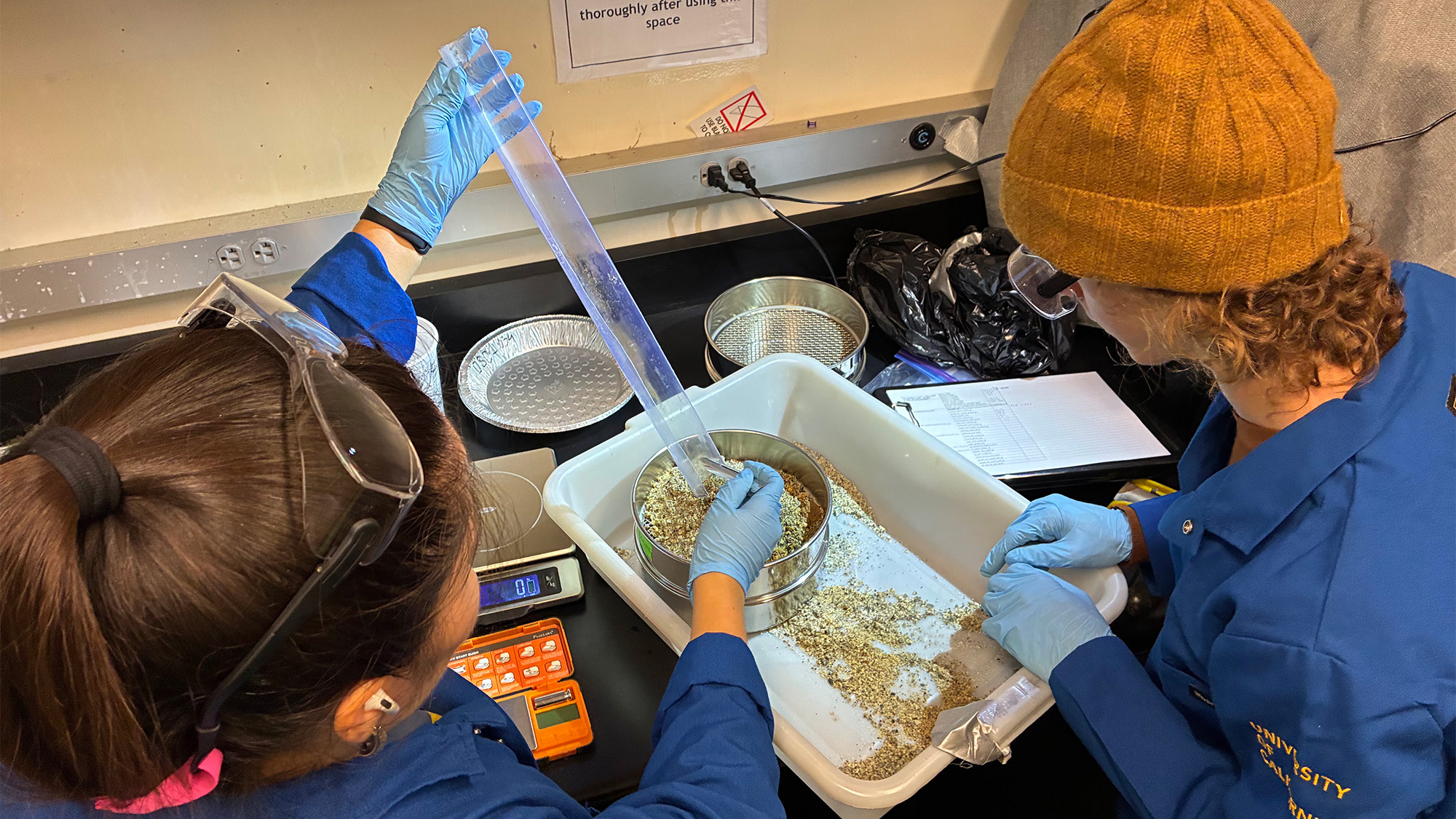
A Shifting Landscape
Importantly, these interactions might be shifting as climate change and wildfires drive waves of tree mortality.
“When a tree dies, the question is, what happens to all of that carbon that they have been pumping into the ground,” said Bogar. “We have no idea how long that material remains below ground, and what that means for carbon cycling on the landscape.”
To investigate how tree mortality impacts soil microbes and carbon storage, the researchers sampled the soil beneath three living and three dead blue oak trees at the UC Quail Ridge Reserve. The dead trees were thought to have died three years earlier, during the 2020 LNU Lightning Complex fire, which burned around 300,000 acres of oak savannah in Northern California.
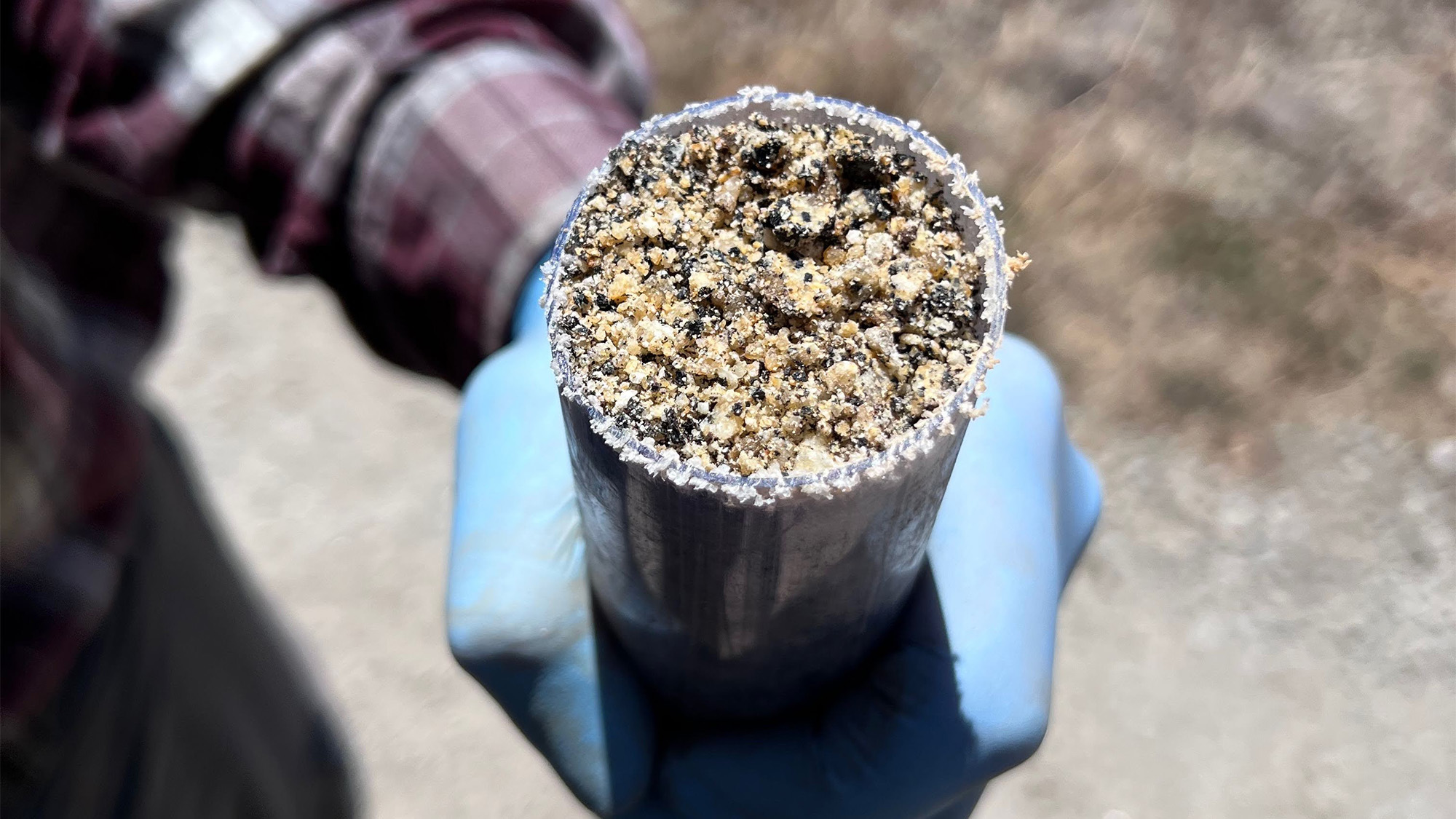
Near the base of each tree, the researchers used hollow metal cylinders called “cores” to extract a single vertical column of soil up to 45 cm deep—around three times deeper than most previous studies have sampled.
Turnover, Not Loss, of Soil Fungi
To their surprise, the team found no difference in the overall biomass of microbes living beneath living and dead trees, or in the density of soil carbon.
“We expected to see more carbon stored under living trees than dead trees,” said Goodman. “The fact that this was not the case suggests that three years of decomposition is not enough time to make a difference to the carbon density in those deep soils.”
However, tree mortality did change which soil microbes were present, and in what quantities, and these shifts were more pronounced in deeper soil.
Specifically, the soil beneath dead trees had a much lower density of symbiotic ectomycorrhizal fungi, which form mutualistic relationships with plant roots, helping plants take up water and minerals in exchange for plant-produced sugars. In surface soil, ectomycorrhizal fungi made up around 18% of the fungi beneath living trees, but only 0.1% under dead trees. In deeper soil, ectomycorrhizal fungi made up around 68% of the fungi under living trees compared to only 9% under dead trees.
“In deeper soil, these mutually beneficial relationships become the driving force of a lot of the biology,” said Goodman. “And as soon as the tree dies, there’s a dramatic change in who we see at those depths: instead of ectomycorrhizae, it's fungi that eat dead wood.”
Now, the team is following up with a more ambitious deep soil project on pine trees in the Southern Sierra.
“In the work that we’re doing now, we’re going down to the limits of our machinery and sampling up to five meters deep to ask similar questions,” said Goodman.
The study, ‘Functional composition of subsoil microbial communities changes with oak mortality’ was selected as an “editor's choice” publication in Soil Biology & Biochemistry.
Additional authors on the study are Ernest N. Walker and Glade D. Bogar, UC Davis.
The work was funded by the National Science Foundation and a University of California, Davis Interdisciplinary Research Catalyst Faculty Fellowship. This project used the DNA Technologies and Expression Analysis Cores at the UC Davis Genome Center.
Media Resources
- Functional composition of subsoil microbial communities changes with oak mortality (Soil Biology and Biochemistry)
- Liana Wait is a freelance science writer based in Philadelphia. She has a Ph.D. in ecology and evolutionary biology and specializes in writing about the life sciences.