Research Stories

Using Machine Learning to Detect Coronavirus Threats

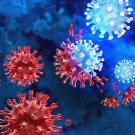
An artificial intelligence model has successfully identified coronaviruses capable of infecting humans, out of the thousands of viruses that circulate in wild animals. The model, developed by a team of biologists, mathematicians and physicists at the University of California, Davis, could be used in surveillance for new pandemic threats. The work was published June 8 in Scientific Reports

An Engineering Approach to Solving Zika Virus 

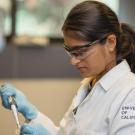
Priya Shah, who holds appointments in the Departments of Microbiology and Molecular Genetics, and the Department of Chemical Engineering, is deciphering the behavior of the Zika virus on animal cells to delve into the possibilities for mitigating the sickness in humans.  

"My lab is really interested in how viruses hijack cells and turn them into little, tiny viral factories," said Shah.   

New UC Davis Research Using DNA Changes Origin of Human Species

In testing the genetic material of current populations in Africa and comparing against existing fossil evidence of early Homo sapiens populations there, researchers have uncovered a new model of human evolution — overturning previous beliefs that a single African population gave rise to all humans. The new research was published today, May 17, in the journal Nature.

Zoonomia Consortium Unveils Mammal Genomes, Creates Evolutionary Timeline

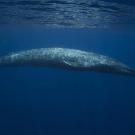
Mammals are an extraordinarily diverse and successful group of animals, from the tiniest pygmy shrew to the mighty blue whale, and including, of course, ourselves. In a special issue of the journal Science published today (April 27), the Zoonomia Consortium shows how comparing the genomes of 240 modern mammals sheds light on mammalian evolution, with implications for conservation and understanding human and animal health.

Center for Neuroscience Researcher Studies the Transience of Memory

Why does memory fade? Why does it stay?

These questions, among others, occupy the mind of Charan Ranganath, a UC Davis psychology professor in the UC Davis College of Letters and Science and a core faculty member with the Center for Neuroscience. But the transient nature of memory isn’t just a focal point of Ranganath’s research. It’s something that he, like the rest of us, deals with daily. 


“As a memory researcher, the most common question that I get in my everyday life is, ‘Why am I so forgetful?’” Ranganath said. 

Understanding Why BRCA2 Is Linked to Cancer Risk

A new study shows exactly how the gene BRCA2, linked to susceptibility to breast and ovarian cancer, functions to repair damaged DNA. By studying BRCA2 at the level of single molecules, researchers at the University of California, Davis, have generated new insights into the mechanisms of DNA repair and the origins of cancer. The work was published the week of March 27 in the Proceedings of the National Academy of Sciences.

Using Hydra to Understand Tissue Regeneration

The Greek hero Heracles fought a monster called the Hydra, which grew two new heads for each one he lopped off. Heracles was lucky he wasn’t fighting something with the regenerative ability of the real Hydra, which can re-grow its entire body from a few hundred cells. This simple water animal is helping scientists explore how some animals can regrow missing body parts.

Circadian Clock Controls Sunflower Blooms, Optimizing for Pollinators

An internal circadian clock controls the distinctive concentric rings of flowering in sunflowers, maximizing visits from pollinators, a new study from plant biologists at the University of California, Davis, shows. The work was published Jan. 13 in eLife.

A sunflower head is made up of hundreds of tiny florets. Because of the way sunflowers grow, the youngest florets are in the center of the flower face and the most mature at the edges, forming a distinctive spiral pattern from the center to the edge.

Rice Breeding Breakthrough to Feed Billions

An international team has succeeded in propagating a commercial hybrid rice strain as a clone through seeds with 95% efficiency. This could lower the cost of hybrid rice seed, making high-yielding, disease resistant rice strains available to low-income farmers worldwide. The work was published Dec. 27 in Nature Communications.