News

Hibernating Corals and the Microbiomes That Sustain Them

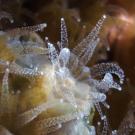
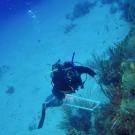
As winter approaches, many species of animals — from bears and squirrels to parasitic wasps and a few lucky humans — hunker down for some needed rest. The northern star coral (Astrangia poculata) also enters a hibernating state of dormancy, or quiescence, during this time. But what happens to its microbiome while it’s sleeping?

CBS Plant Ecologist One of Five to Receive L'Oréal Fellowship

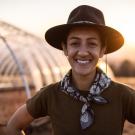
A prestigious fellowship has found a new recipient in CBS Postdoctoral Researcher Marina LaForgia, who was one of 5 postdocs in the country named a 2022 L'Oréal USA for Women in Science Fellow in November.

In her teaching, LaForgia, who studies the ecology of seeds to understand the effects of climate change and invasive plants on native plants, focuses on the women who have helped advance the field of botany.

Breaking the Loop Leading to Muscular Fibrosis

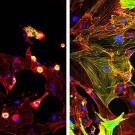
A team of UC Davis researchers is on a mission to solve a key mystery in the formation of muscular fibrosis. The researchers are studying why special stem cells known as fibro-adipogenic progenitors (FAPs) get derailed from normal muscle regeneration following injury, and instead produce excess material that can lead to fibrosis. The team may have unlocked a way to prevent these cells from getting stuck in an endless loop of collagen production, causing fibrotic muscles. 

Making Prosthetics More Lifelike

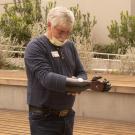
David Brockman, a retired CalFire captain and avid outdoorsman, built a deck in the backyard of his home last year, without the use of his dominant right hand, which he lost in an accident. The prosthetic hand he used instead was a crude but functional steel hook-and-harness device.

Brockman has tried other artificial limbs, including a high-tech prosthesis called a myoelectric. It looks like a hand and works by using electrical signals from muscles in the forearm. But that one just didn’t work for him.

Corals Saving Corals

Under the right living arrangement, disease-resistant corals can help “rescue” corals that are more vulnerable to disease, found a study from the University of California, Davis, that monitored a disease outbreak at a coral nursery in Little Cayman, Cayman Islands. 

Biodiversity Genomics Europe Aims to Reverse Biodiversity Loss

UC Davis is a collaborating partner in a new European effort to use DNA data to characterize and conserve life on Earth. The Biodiversity Genomics Europe consortium, launched Sept. 26, is affiliated with the Earth BioGenome Project, which has its administrative headquarters at UC Davis. Harris Lewin, distinguished professor of evolution and ecology at UC Davis, chairs the EBP Working Group.

Rachael Bay Lab Wins Top Safety Award

When you’re experimenting with water, electricity and live animals, a lot can go wrong if you’re not careful. And no one knows more about that than Rachael Bay and her research team.

They study human-induced changes in the environment and evolutionary processes — things like climate change, coral bleaching and bird migration. And when you’re doing that kind of work — handling chloroform one day and blood samples the next — you want to make sure you’re not cutting corners.

From the Dean: A Vibrant Fall

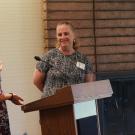
November is here and winter is closer. The weather has gotten cooler, and the nights start earlier, but campus is active, and our students are halfway through the fall quarter. Especially after the pandemic years, there’s something revitalizing about having our students on campus. Whether they’re studying for an exam on the couches in the Green Hall lobby or having a discussion section in the courtyard, their presence is always welcome.

Uniting Horsemanship and Biology

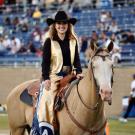
When McKensey Middleton holds horse reins, every slight movement conveys something. Where she places the reins on the horse’s neck gives the horse direction, a path; a tug on them signals for the horse to stop or slow down.

“When you watch a rider, you’re really watching them communicate with the horse,” said Middleton, ’22 B.S. Biochemistry and Molecular Biology. “Your legs, your voice, your hands, you’re using these things to communicate with the horse.” 

Study Identifies Key Mechanism for Protein Trafficking in Plants and Bacteria

Plants photosynthesize to survive, and bacteria divide to reproduce, but to accomplish these necessary biological functions, the cells of these organisms employ protein trafficking. More specifically, these functionalities, among many others, rely on the twin-arginine translocation (Tat) pathway, which, when properly functioning, allows for the transportation of proteins across cellular membranes.