Evolution & Ecology

How Students Dive into Marine Science at UC Davis

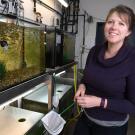
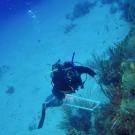
UC Davis junior Caroline Donohew watched the everyday power of biology in just five minutes during her summer session class at UC Davis’ Bodega Marine Laboratory, or BML, a coastal research and education facility about 100 miles west of campus. 

While observing a mussel’s muscle through a microscope, “I saw it create a byssal thread in real time,” said Donohew, who is from San Anselmo. “And it was just so cool.” 

Genome Study Shows Recent Spread of Eelgrass

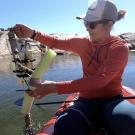
Beds of eelgrass (Zostera marina) form an important habitat in coastal regions throughout the northern hemisphere, crucial to many fish and other species and storing vast amounts of carbon. A new study published July 20 in Nature Plants shows that eelgrass spread around the world much more recently than previously thought, just under a quarter-million years ago. The results have implications for how eelgrass could be affected by a changing climate.

Distinguished Ichthyologist Peter Wainwright Receives Prestigious Lifetime Achievement Award

Peter Wainwright, a Distinguished Professor and Chair of the Department of Evolution and Ecology, has been honored with the 2023 Joseph S. Nelson Lifetime Achievement Award in Ichthyology. Conferred by the American Society of Ichthyologists and Herpetologists (ASIH), the award recognizes exceptional contributions to the realm of fish biology and aquatic ecosystems.

Wainwright received the award in honor of a distinguished career marked by groundbreaking research, transformative education and dedicated service to his field.

Students Collect Samples at Arboretum to Measure Water Quality

The Arboretum and Public Garden at UC Davis is about to get a fresh set of water quality data after students fanned out earlier this month along the Arboretum Waterway to measure salinity and fecal coliform levels.

The three-hour session began with a lecture, then moved to the Arboretum for sampling and back to a lab to analyze what students collected. The information will be shared with Arboretum management to help provide a glimpse into the health of the creek.

Zoonomia Consortium Unveils Mammal Genomes, Creates Evolutionary Timeline

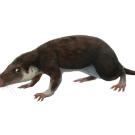
Mammals are an extraordinarily diverse and successful group of animals, from the tiniest pygmy shrew to the mighty blue whale, and including, of course, ourselves. In a special issue of the journal Science published today (April 27), the Zoonomia Consortium shows how comparing the genomes of 240 modern mammals sheds light on mammalian evolution, with implications for conservation and understanding human and animal health.

Horsing Around with Music

Though animals respond well to music, humans are usually the ones to choose it. To change this, a senior design team in the College of Engineering developed a device that lets horses choose which music they want to listen to.

CBS Majors Co-Found Society to Bring More Native Plants to Campus

When UC Davis student Madison “Madi” Burns joined the Davis Rewilding Society during her freshman year, it helped bring her future into focus. The second-year landscape architecture major said she has developed a much better understanding of the importance of native plants from her involvement with the student-run organization.

“Being part of the club has really expanded my knowledge and has made an impact on what I want to do with my life and my career,” Burns said. “I want to design spaces to incorporate native species.”

Kate Laskowski Named 2023 Sloan Fellow

Three UC Davis faculty members are among 125 recipients of this year’s Sloan Research Fellowships, prestigious awards given by the Alfred P. Sloan Foundation to early-career scientific researchers seen as emerging leaders in their fields.

The 2023 fellows, including UC Davis’ Kate L. Laskowski, Jesús M. Velázquez and Alexander S. Wein, “represent the most promising scientific researchers working today,” the Alfred P. Sloan Foundation said in announcing its selections Feb. 15.