News Articles

All articles

Worms Reveal Just How Cramped Cells Really Are

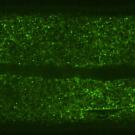
In a new study published in Science Advances on September 10, a team of UC Davis researchers tracked the movement of fluorescent particles inside the cells of microscopic worms, providing unprecedented insights into cellular crowding in a multicellular animal. They found that the cytoplasm inside the worms was significantly more crowded and compartmentalized than in single-celled yeast or mammalian tissue culture cells, which are more commonly used to gauge internal cellular dynamics.

Fly Brain Holds Secrets of Body Temperature and Sleep

The mind of a fruit fly encompasses 125,000 nerve cells, squeezed into the space of a poppy seed. At first glance, the fly brain looks nothing like a human brain. But many of the underlying neural circuits are surprisingly similar.


Fumika Hamada, a professor of neurobiology, physiology, and behavior, is using fruit flies to study a critical but oft-overlooked brain function: the regulation of our body temperature in a consistent daily rhythm.


Among the Academies: Studying How Plants Adapt

How can plants adapt to their environment, and how will they be able to adapt to climate change? Those are among the biggest questions Johanna Schmitt has sought to answer during her career as a plant geneticist and evolutionary ecologist.

Center for Neuroscience Names Marie Burns New Director

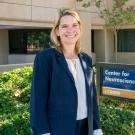
Vision neuroscientist Marie E. Burns has been appointed the sixth director of the Center for Neuroscience (CNS), effective July 1, 2025, after serving as interim director for the past year.

A professor with joint appointments in the departments of Ophthalmology and Vision Science, and Cell Biology and Human Anatomy in the School of Medicine, Burns brings more than 20 years’ leadership experience to the role.

This Snail’s Eyes Grow Back: Could They Help Humans do the Same?

Human eyes are complex and irreparable, yet they are structurally like those of the freshwater apple snail, which can completely regenerate its eyes. Alice Accorsi, assistant professor of molecular and cellular biology at the University of California, Davis, studies how these snails regrow their eyes — with the goal of eventually helping to restore vision in people with eye injuries.

Mark Winey to Conclude Tenure as Dean of UC Davis College of Biological Sciences

After a decade of leadership marked by growth in research, student success and interdisciplinary advances, Mark Winey will step down as dean of the UC Davis College of Biological Sciences in 2026. A national search for his successor will begin this fall.

Winey, the college’s longest-serving dean, said he was first drawn to UC Davis by its uniquely expansive and collaborative biology community—and by the opportunity to serve on a broader scale.

Pancreatic Cancer Researcher Recognized for Excellence in Mentoring Undergraduate Researchers

In the college, undergraduate students don’t just learn from textbooks—they actively contribute to new scientific knowledge through hands-on research. This experiential learning is a hallmark of a UC Davis education, especially in the life sciences.

For his outstanding commitment to ensuring undergraduate students have these meaningful and immersive research experiences, Chang‑il Hwang, an associate professor of microbiology and molecular genetics, has received a 2025 Chancellor’s Award for Excellence in Mentoring Undergraduate Research.