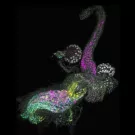
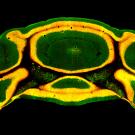
You have likely not spent much time thinking about the uterus of the fruit fly, Drosophila melanogaster. But then, neither have most scientists, even though Drosophila is one of the most thoroughly studied lab animals. Now a team of biologists at the University of California, Davis, has taken the first deep look at the Drosophila uterus and found some surprises, which could have implications not just for understanding insect reproduction and potentially, pest control, but also for understanding fertility in humans.
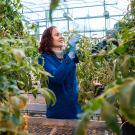
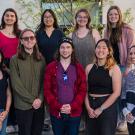
Commitment.Passion. Empathy. These descriptors were just a few of the plaudits the winners of the 2024 Graduate Program Advising and Mentoring Award received in their nomination letters.
“[This professor’s] mentorship is always the perfect balance of pushing you to your full capacity, while also supporting at a level that fosters independence, creativity and self-ownership.”
“[This professor] combines a deep sense of empathy with a steely commitment to student development.”
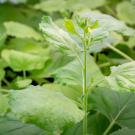
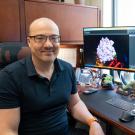
For many plants, more branches means more fruit. But how does a plant branch or not branch? New research from the Department of Plant Biology has shown how plants break down the hormone strigolactone, which suppresses branching, to become more “bushy.” Using a combination of structural biology, biochemistry, and genetic engineering, the team confirmed the specific enzymes responsible for dismantling strigolactone, and their mechanism. Understanding how strigolactone is regulated could have big implications for many crop plants.
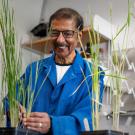
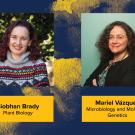
The college is proud to announce the recipients of the 2024 CBS Faculty Teaching and Research Awards. These two prestigious awards honor faculty members who have demonstrated exceptional dedication to teaching and research, and highlight the integral role each plays in advancing the frontiers of biological sciences.
The UC Davis College of Biological Sciences champions Diversity, Equity, Inclusion, and Justice (DEIJ) through the Graduate Student DEIJ Leader Fellowship program. Now in its second year, the program empowers enterprising graduate students committed to enhancing DEIJ within the CBS community by supporting projects aimed at fostering a more inclusive academic environment.
Plants need to be able to communicate with themselves—by sending signals from their leaves to their roots to their flowers—so that they can coordinate growth and optimize resource use. They also need to communicate with other plants and organisms, which they achieve by releasing volatile organic compounds (VOCs), tiny molecules that are often associated with distinct smells. Scientists know a lot about how plants emit these odorous signals, however very little is known about how they receive and interpret them.
Ten faculty from UC Davis are among 502 newly elected fellows of the American Association for the Advancement of Science, the society announced today (April 18). AAAS fellows are scientists, engineers and innovators who have been recognized for their achievements in science, including research, teaching, administration and science communication.
Researchers in the College of Biological Sciences have received a grant to study the role of the cerebellum in autism. “We need a more holistic understanding of the brain circuits that drive this disorder,” says Alex Nord, an associate professor of neurobiology, physiology and behavior (NPB), and a researcher at the Center for Neuroscience (CNS). “The cerebellum is a key component that has been largely overlooked until recently.”