In December 2018, Distinguished Professor Venkatesan Sundaresan and his colleagues published in Nature a method that allowed them to produce clonal seeds directly from plants, bypassing the sexual reproduction process. Replicating this process in the lab could prove vital to providing the world’s farmers with high-yielding, disease-resistant or climate-resistant food crops.
For nearly two decades, Professor Julin Maloof has shined a light on biological knowledge for UC Davis students, introducing computational methods to the life sciences curriculum. For his dedication to his students, Maloof received the 2018-2019 Faculty Teaching Award.
As director of the Coastal and Marine Sciences Institute, Richard Grosberg oversees an interdisciplinary body that includes membership from the College of Biological Sciences, the College of Agricultural and Environmental Sciences, the College of Letters and Science, the College of Engineering, the School of Law, the School of Veterinary Medicine and the Graduate School of Management.
Of the major food crops, only rice is currently able to survive flooding. Thanks to new research, that could soon change -- good news for a world in which rains are increasing in both frequency and intensity.
A new study from the Genome Center at the University of California, Davis, shows that many odiferous compounds from a male cat are actually made not by the cat, but by a community of bacteria living in the anal sacs.
Assistant Professor Chang-il Hwang, Department of Microbiology and Molecular Genetics, studies pancreatic cancer, one of deadliest cancers. Learn more about how Hwang and his lab colleagues are fighting pancreatic cancer with the help of organoids.
The Asian citrus psyllid is the bogeyman of the citrus industry. Its appearance in fields is a dark harbinger for farmers, for carried within this insect is the bacteria Candidatus Liberibacter, the cause of citrus greening disease. In a study published in Scientific Reports, UC Davis researchers report that an acetic acid-based, slow-release trap is capable of capturing Asian citrus psyllids even when the insect populations are low.
In a new publication in The Plant Cell — “Chloroplast Outer Membrane β-Barrel Proteins Use Components of the General Import Apparatus” — authors Philip Day, Steven Theg, and Kentaro Inoue, all at University of California, Davis, determined how β-barrel proteins are sorted to the correct location in plant chloroplast envelopes, which have two membranes.
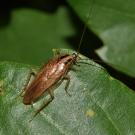
Sexual determination and differentiation work in myriad ways across the animal kingdom. In vertebrates, like mammals and fish, sexual determination leads to the development of either ovaries or testis. These organs then secrete hormones that go on to govern the sexual development of the rest of the organism’s body. Insects are a completely different beast.
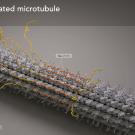
In a new study appearing in Nature Cell Biology, UC Davis researchers found that tau molecules can congregate together in a novel, reversible way, which appears to be distinct from the irreversible tangle formation observed in neurodegenerative diseases.