When it comes to education in the biological sciences, applied learning like undergraduate research is integral to the assimilation of knowledge. Through experiences in the laboratory, students acquire new skills and reinforce learnings from the lecture hall, taking techniques from the page to the pipette and laying the foundation on which they’ll build the rest of their careers.
For some students, undergraduate research experiences may seem out of reach, but philanthropy can help provide the resources they need to participate in such important educational endeavors.
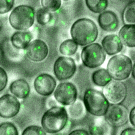
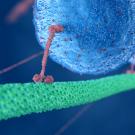
In the choreography of meiosis—the process responsible for sex cell division in all eukaryotic life—the pairing of homologous chromosomes (homologs) is essential. Errors in this process can lead to an incorrect number of chromosomes in sex cells, which can result in birth defects and miscarriages. Despite being studied for more than 100 years, mysteries about the process still abound.
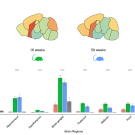
The first atlas of metabolites in the mouse brain has been published by a team led by UC Davis researchers. The dataset includes 1,547 different molecules across 10 brain regions in male and female laboratory mice from adolescence through adulthood and into advanced old age. The work is published Oct. 15 in the Nature Communications. The complete dataset is publicly available at https://mouse.atlas.metabolomics.us/.
Gerald Quon, an assistant professor in the Department of Molecular and Cellular Biology and the Genome Center, has received a New Innovator Award from the National Institutes of Health (NIH). The award will support the development of a computational framework for characterizing how genetic variants associated with the risk of psychiatric diseases like schizophrenia and bipolar disorder work at the at the cellular level.
Rishi Sharma’s passion for community service can be traced back to his parents. While growing up in Dubai, Sharma watched his parents, who are both doctors, hone their expertise in the medical field. As his parents advanced in their careers, they never forgot about the people around them.
“They moved up the ladder, and as they did they used more of their experience to invest in the community,” said Sharma, a biochemistry and molecular biology major in the UC Davis College of Biological Sciences.
A team of scientists from UC Davis and Rice University are starting small as they begin to figure out how to build an artificial brain from the bottom up.
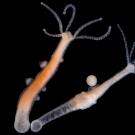
Celina Juliano, an associate professor in the Department of Molecular and Cellular Biology, and Jacob Robinson of Rice University’s Brown School of Engineering have won a $1 million Keck Foundation grant to advance the team’s synthetic neurobiology effort to define the connections between neurons and muscles that drive programmed behaviors in living animals.
Three UC Davis researchers, including Assistant Professor James Letts, will receive funding from the Early Career Research Program of the U.S. Department of Energy. They are among 83 researchers at U.S. universities and national laboratories funded by the program this year. The awards are of $150,000 for summer salary and research expenses each year and are intended to last for five years.
The laboratory of Richard McKenney, an assistant professor in the Department of Molecular and Cellular Biology has published new research on the role of the KIF1A motor protein in degenerative disorders in children.
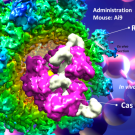
We might one day be able to treat diseases or inherited disorders by rewriting parts of the genetic code in our own cells. The National Institutes of Health established the Somatic Cell Genome Editing consortium, with funding of $190 million over six years, to advance research in genome editing, develop tools and test them in animal models before advancing to human clinical trials.
Jodi Nunnari, a distinguished professor and chair in the Department of Molecular and Cellular Biology, is one of four UC Davis professors who have been elected to the American Academy of Arts and Sciences. Founded in 1780 by John Adams, John Hancock and others, the academy honors excellence and includes leaders from every field of human endeavor including scientists, artists, performers, poets and political leaders.