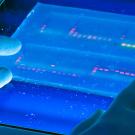
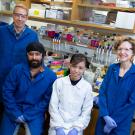
In a study appearing in Science, Assistant Professor Celina Juliano, Department of Molecular and Cellular Biology, and her colleagues used single-cell sequencing techniques to explore the genetic trajectory for nearly 25,000 cells of the immortal Hydra.
An assistant professor of teaching in the Department of Molecular and Cellular Biology, Marina Crowder teaches hundreds of UC Davis students each quarter. From BIS 101 "Gene and Gene Expression" to MCB23 "History of Cancer," Crowder doesn't just want her students to learn the material from class; she wants them to engage with it.
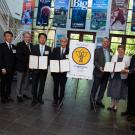
Educators from Osaka University and UC Davis are proud to announce the launch of a new biotechnology research and training program between Japan and the United States. Graduate students from both universities will gain access to world-class research facilities and professional training across many areas.
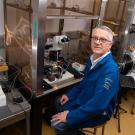
To inform pest management techniques and fight threats like Citrus Greening disease, Walter Leal and his colleagues use reverse chemical ecology to identify sex pheromones in insects. From Brazil to Japan to Davis, Calif., Leal's research path has been unique.
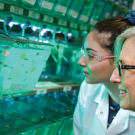
What can a worm or fish tell us about the human body? When it comes to biology, quite a lot actually. Learn how UC Davis researchers are using animal models to answer basic biological questions that will build the foundation for revolutions in human health in the new feature story "A Menagerie of Model Organisms."
Distinguished Professor Walter Leal, Department of Molecular and Cellular Biology, has been chosen to deliver the Founders' Memorial Award lecture at Entomology 2019, November 17-20, in St. Louis, Mo.
The genome—the complete suite of an organism’s DNA and genes—is likened to a blueprint for life. On the surface, this comparison provides some understanding of a biological concept. But according to some scientists, it misses the mark.
Associate Research Geneticist Emerita and Lecturer Deborah Kimbrell was among those honored at the International Connections Reception hosted by Global Affairs on March 7.
On Thursday, Feb. 28, the College of Biological Sciences will host the Nara Institute of Science and Technology Mini-Symposium, which will feature talks on parasitic plants, chimeric animals and the molecular mechanisms of central nervous system formation, among other topics. The symposium will be held in Life Sciences 1022.
In a study appearing in Genetics, UC Davis researchers relay new discoveries about the molecular mechanisms behind sexual determination. Using zebrafish, they highlighted the gene responsible for determining whether the fish will develop into a female or a male.